Rental Listing Platforms for Multifamily Landlords Compared
Apartments.com and Zillow dominate, but specialists carve profitable niches.
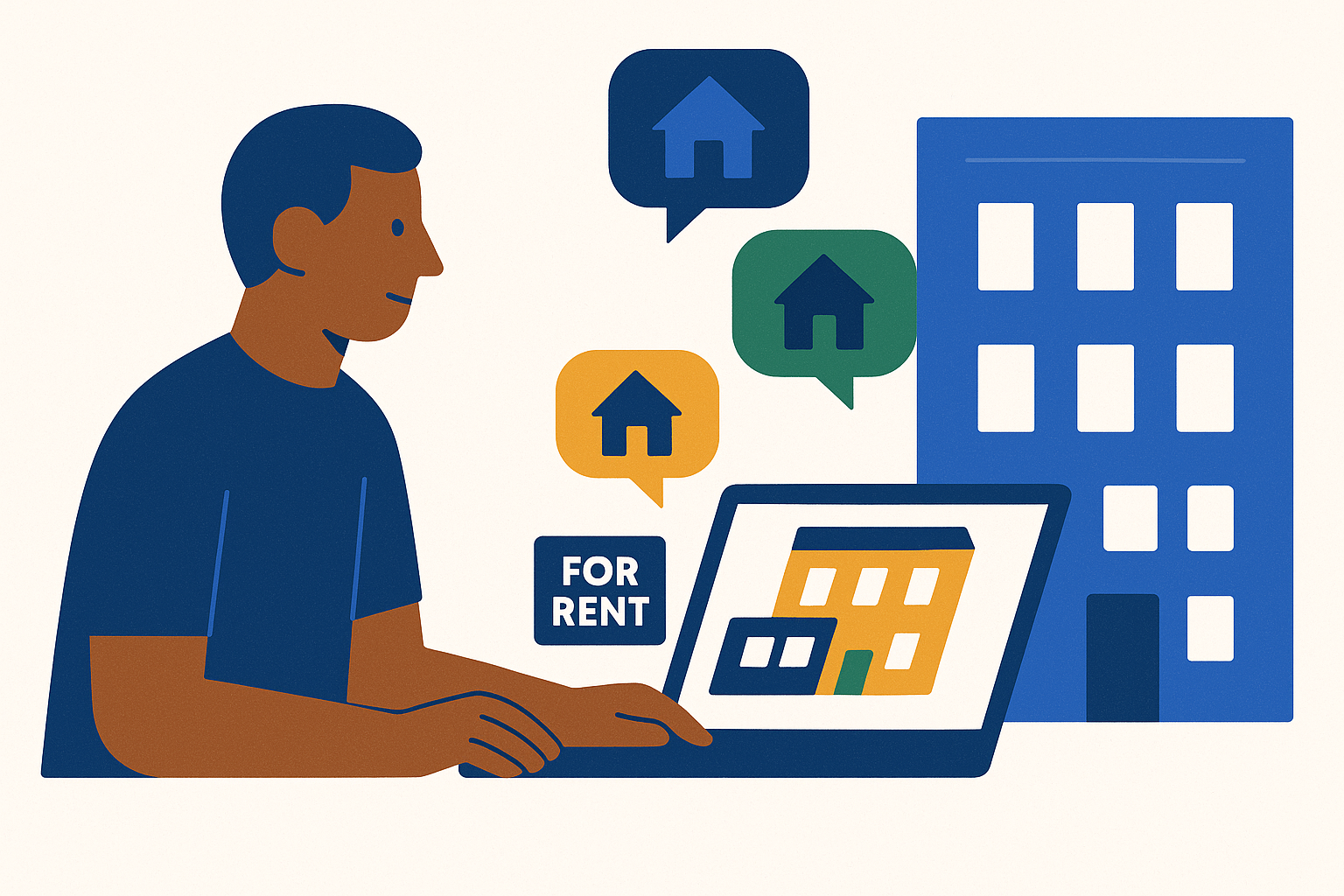
Two companies eat most of the lunch here, and it isn't a close contest. Apartments.com, owned by CoStar Group, brought in over $570 million in the first half of 2025, which works out to 38% of CoStar's entire company revenue. Zillow's multifamily rentals business did about $200 million over that same stretch, or 16% of Zillow's total. Different scale, same bet underneath it: people will pay real money to get a listing in front of renters.
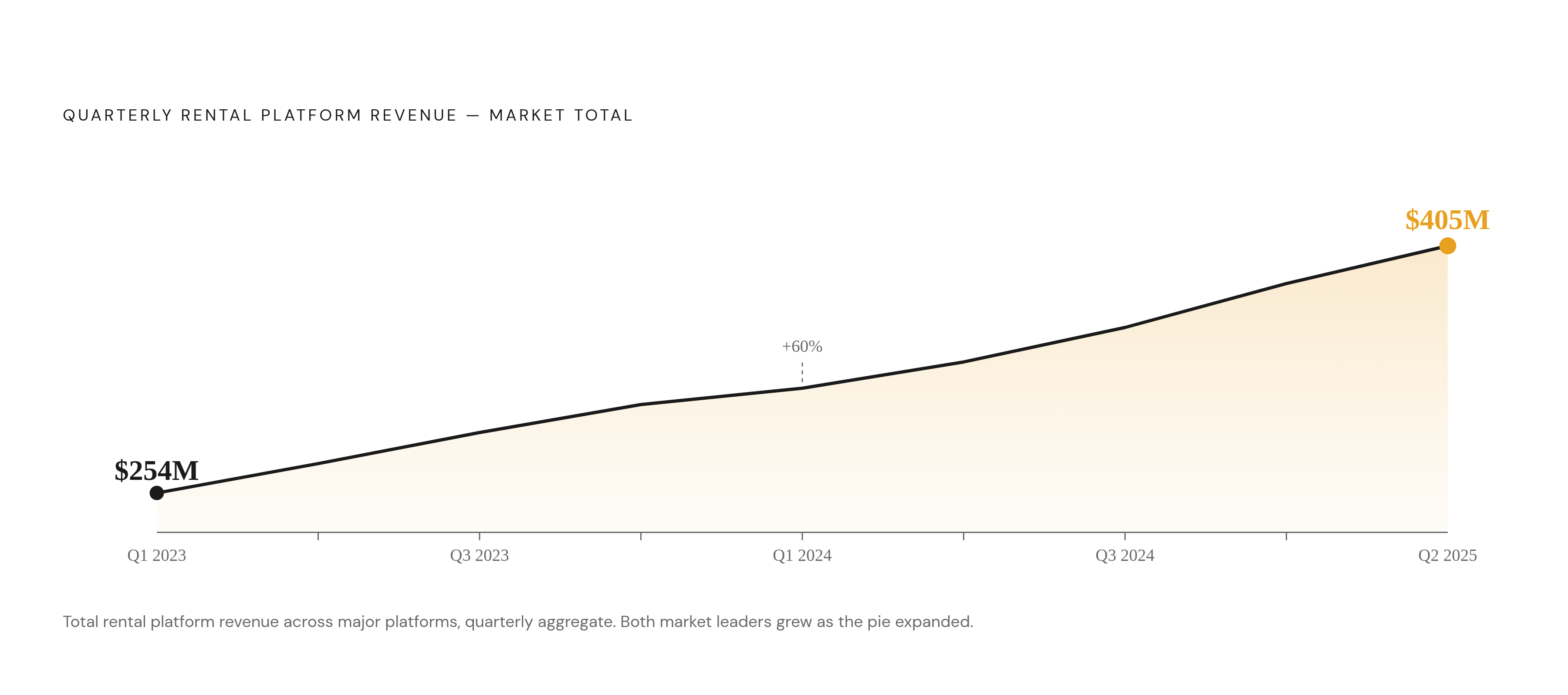
Here's the part that surprised me when I first dug into the numbers. This category is growing fast enough that both giants can win at the same time. Total quarterly revenue across the space went from $254 million in Q1 2023 to $405 million in Q2 2025. The pie itself got bigger.
Behind the two giants sit a handful of specialists, each staking out a narrower patch of ground. Rent.com and the Redfin network chase big multifamily accounts. RentCafe ties itself to Yardi's operating system and doesn't apologize for it. Zumper and PadMapper go after the urban, younger-renter crowd. Look closely and a pattern shows up: platforms tend to pick a lane, either mass consumer reach or deep workflow tools for professional operators, and rarely both at once. That tension is basically the whole plot of this market.
One wrinkle before we go further, and it's a real one. Zillow's acquisition of Redfin sits under an active FTC antitrust challenge as of mid-2026, and a federal judge already let the case move forward instead of tossing it. If that deal gets unwound or reshaped, the syndication pipes landlords currently lean on could shift underneath them without much warning. So picking a platform right now means weighing a distribution risk alongside the usual marketing math, whether you like it or not.
Zillow Rental Manager: unmatched reach with a cost that climbs as you scale
Zillow's traffic numbers are hard to argue with, and I've stopped trying. Zillow Group reported 221 million average monthly unique users and 2.1 billion visits across its apps and sites in Q4 2025, and Similarweb ranked zillow.com the number one real estate site in March 2026. Post there and the listing syndicates automatically to Trulia and HotPads, plus Realtor.com, and Redfin properties too, once the antitrust dust settles one way or the other.
Pricing starts generous, then narrows fast. Your first listing is free. Every additional active listing runs $29.99 for a 90-day stretch, and a premium upgrade at $39.99 per listing buys you top placement plus performance data. Fine if you own two or three units. Less fine once you're running twenty and watching the invoices pile up.
Two features earn their keep on the renter side. The "Total price" badge shows base rent plus every required monthly fee upfront, which weeds out the tire-kickers and pulls in applicants who already know the real number. There's also a portable application: renters pay once for a reusable credit and background report, a soft pull, good for 30 days across any participating listing. That's less friction in the pipeline for everyone, landlord included.
On the flip side, Zillow doesn't manage your leasing office for you. No built-in showing coordination, no document validation past the basics. Lead generation is the whole engine here; everything after the lead lands is on you.
And that's where the math turns unfriendly for bigger portfolios. A landlord running 20 units watches per-quarter listing costs stack up, and in competitive metros the premium upgrade quietly stops being optional. It becomes the price of admission just to get noticed at all. Layer on Zillow's own syndication reach and you get a second headache: the same unit shows up on Trulia, HotPads, and Zillow simultaneously, which can leave renters unsure which listing is the "real" one. Zillow fits best for landlords with a smaller unit count, or portfolios mixing single-family with multifamily, where raw reach is worth more than the per-unit sting.
Apartments.com: the purpose-built multifamily platform with the deepest free toolkit
Apartments.com runs real-time availability across more than 1.4 million listings, covering apartments, houses, condos, and townhomes. Post once and it distributes across the whole CoStar Group network, including ForRent.com, ApartmentFinder, and Westside Rentals. No juggling four logins to get that reach.
The pricing is refreshingly plain: standard listings are free, even if you own one door or two. Premium ads cost extra and get priced by market, aimed at landlords chasing boosted placement, video, and sharper creative to stand out from the pack.
What actually separates Apartments.com from the pack is the free "Rental Tools" suite bundled into a standard listing, no upsell required. You get integrated applications and screening, with the applicant footing that bill, state-specific lease generation, online rent collection, and a "Cost Calculator" that shows renters the real total cost before they apply. That calculator is turning into something closer to a compliance requirement as more states tighten fee-transparency rules; it's becoming table stakes.
The platform also puts real weight behind fraud prevention and listing quality, pushing toward professionally managed, media-rich community pages through actual verification steps. That focus shows up clearest on Class A multifamily properties, where photo quality and unit accuracy genuinely move the needle.
Worth saying plainly: Apartments.com doesn't out-traffic Zillow everywhere. In dense metros, the premium tier often turns from optional to necessary just to get seen at all. Meanwhile, 2024 growth slowed some, which CoStar chalked up to shifting its sales force toward launching Homes.com instead. That's a distraction worth weighing when you're judging momentum, even if it isn't a structural crack. For landlords running multiple units who want lead quality plus real workflow tools, without buying a separate management platform on top, this is the free tier that does the most work for free.
Rent.com and the Redfin network: enterprise reach, a locked door for independent landlords
Rent.com draws over 45 million users a month, and one listing syndicates automatically to ApartmentGuide, Rentals.com, and Redfin. One post, four fronts, zero extra logins. The "Total Cost of Renting" tool mirrors what's showing up on Zillow and Apartments.com now, and given where renter-protection rules are heading, that kind of upfront disclosure is turning into table stakes rather than something worth bragging about.
The whole platform is built around enterprise operators. Advertising packages and performance analytics are tuned for portfolio-level optimization, the sort of thing a regional property management company obsesses over, rather than unit-by-unit management for a landlord running eight units off a spreadsheet at the kitchen table. Pricing is package-based and nowhere published; you talk to a salesperson or you don't find out, which in practice locks most small or independent landlords out before they even start.
Then there's the antitrust cloud hanging over the whole arrangement. Zillow bought Redfin, the FTC sued to block it, and a federal judge let the case proceed in May 2026. If regulators force a breakup or restructuring, the pipe connecting Rent.com listings to Redfin's traffic could get cut or rerouted, and nobody knows yet what the other side of that looks like. Anyone building a multi-year strategy around Rent.com should treat that as a live variable, not background noise to ignore.
The syndication breadth cuts both ways here too. Show the same unit on Rent.com, ApartmentGuide, and Rentals.com at once, and renters sometimes wonder if they're staring at duplicated inventory, which quietly chips away at a listing's credibility. This platform fits professionally managed communities with dedicated leasing staff and a marketing budget built to absorb enterprise pricing. Everyone else will find the door harder to open than it looks.
RentCafe: full lifecycle integration for landlords already living on Yardi
RentCafe comes with a hard gate right at the entrance: it's only available to operators already running Yardi Breeze or Yardi Voyager. No exceptions, no side door. If your property management system is anything else, this platform simply isn't on the table, full stop.
For operators who do run Yardi, though, the integration goes deep, genuinely deep. Every renter touchpoint, lead capture, application, screening, lease signing, rent payment, maintenance request, renewal, flows straight into Yardi without import files, without middleware, without anyone on staff re-typing the same data twice by hand. There's an AI layer built into lead management for prospect communication, plus marketing tools, PPC, and SEO, all run from the same dashboard you're already staring at for operations.
The public-facing side, RentCafe.com, pulls in millions of monthly visits from active apartment seekers, though the inventory leans hard toward professionally managed multifamily communities rather than single-family rentals or small multiplexes. Pricing is custom and enterprise-level; you won't find a number on any website, you'll go through a Yardi sales process to get one, like it or not.
The real question with RentCafe is whether Yardi is the right foundation for your operations in the first place, since the quality of the platform itself is rarely in doubt for the right operator. Already on Voyager? RentCafe is the obvious marketing layer to bolt on top. Not on Yardi at all? The integration requirement makes this a non-starter before you even get to the feature list. Built for large apartment communities and regional operators who want marketing and operations running off the same rails, and not much use to anyone else.
Zumper and PadMapper: the urban, younger-renter channel building out its multifamily tools
Zumper pulls in more than 76 million site visits a year and calls itself the largest privately held rental platform in North America. List on Zumper and it publishes simultaneously to PadMapper, so one post covers two audiences at once.
The demographic fit is the real story here, more than the traffic number itself. Zumper shows up consistently as the strongest channel for millennial and Gen Z renters in urban markets, which matters plenty if the community you're leasing skews young. A platform's raw traffic figure means less than whether that traffic actually matches your target tenant.
On the enterprise side, Zumper has built real multifamily tools: centralized listing management distributed across more than 60 publishers from one dashboard, an AI leasing assistant named Zoe that qualifies and responds to leads, Gemini-powered recommendations for optimizing listings, and interactive cost calculators where renters click through optional and situational fees to see their actual monthly total. That last feature tends to produce sharper inbound leads, because the renter who reaches out already knows the real number before they call.
Pricing starts with a free account and a handful of included listings, and paid plans unlock unlimited listings plus centralized portfolio management, scaled to portfolio size rather than charged per unit. The catch is scale itself: Zumper's traffic is nowhere near Zillow's 221 million monthly users, so it works best as a complement to a primary platform rather than a standalone strategy for most multifamily portfolios. It earns its spot for urban communities chasing younger renters, or for operators who want broad multi-publisher reach paired with modern AI tools bolted on top.
How the platforms stack up on the things that actually drive ROI
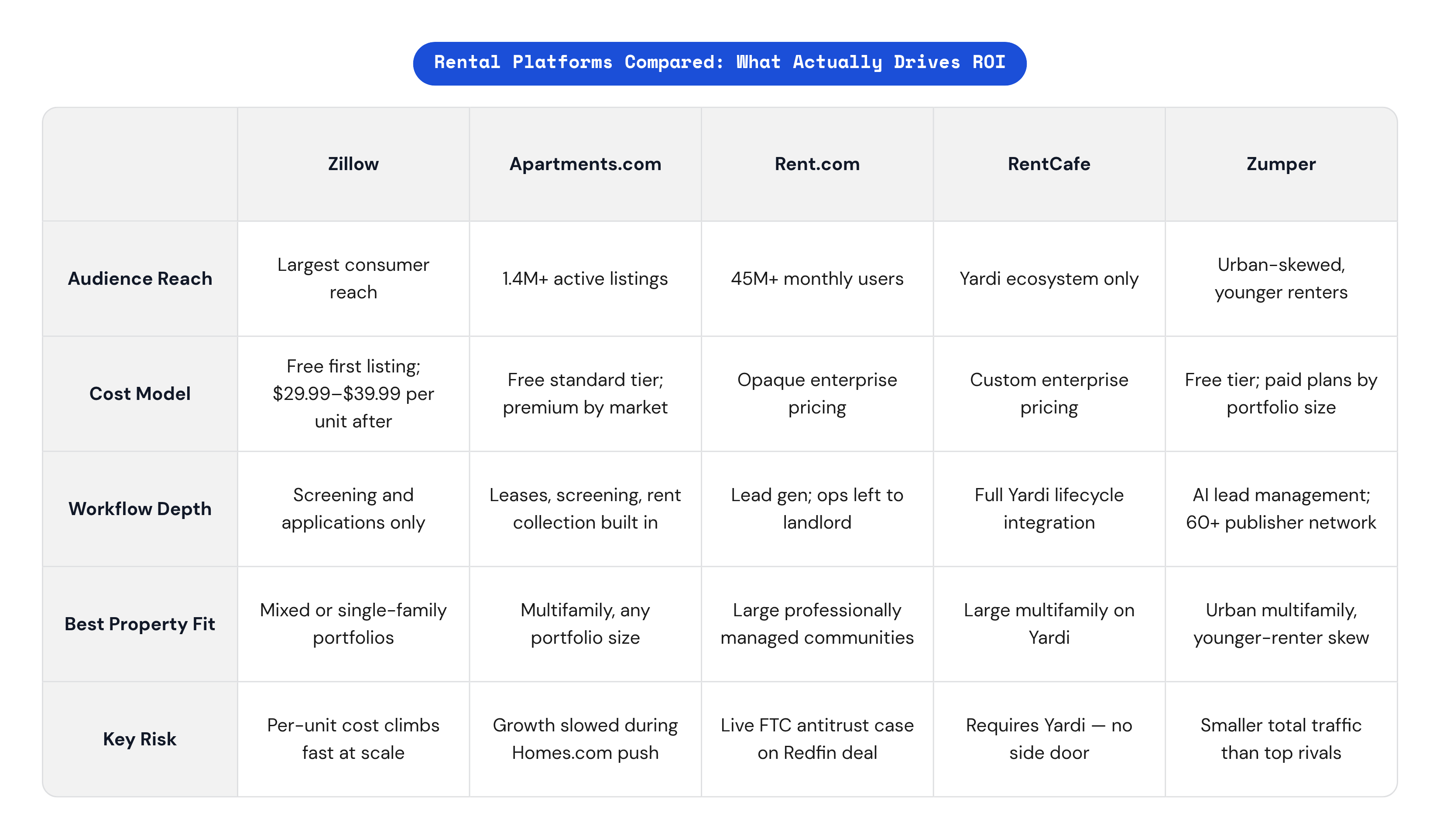
Line them up by raw audience and Zillow wins by a mile, 221 million monthly users against Zumper's 76 million annual visits, skewed urban, then Rent.com's 45 million, enterprise-focused, then Apartments.com's 1.4 million listings, a smaller number but a sharper one, and RentCafe, whose reach is real but locked inside the Yardi ecosystem.
Cost is where things get honest fast. Apartments.com and Zumper both offer free tiers with teeth; Zillow gives you one free listing before per-unit charges kick in at $29.99 for 90 days, with a $39.99 premium bump stacked on top. Rent.com and RentCafe live in opaque, custom-enterprise territory, where getting a number means getting on a call first.
Workflow depth is a different conversation entirely, and it doesn't follow the traffic rankings at all. RentCafe goes deepest, because it's wired directly into the full Yardi lifecycle, and Apartments.com trails close behind with free lease generation, screening, and rent payment tools baked in. Zumper's enterprise tier sits in the middle, AI lead management plus its 60-plus publisher network. Meanwhile, Zillow and Rent.com stay lighter on workflow by design: Zillow handles screening and applications and stops there, while Rent.com focuses on lead generation, leaving the operational lifting to the landlord.
Property type fit tracks a similar split. Apartments.com, RentCafe, and Rent.com's enterprise tier are built for multifamily and don't pretend otherwise. Zillow flexes well across mixed portfolios and single-family units. Zumper owns the urban, younger-renter niche better than anyone else on this list.
Here's something worth sitting with for a second: all four major consumer-facing platforms, Zillow, Apartments.com, Rent.com, and Zumper, converged on the same idea within the last couple years, showing renters the total cost upfront instead of just base rent. That's not coincidence. It tracks where fee-transparency regulation is heading, and it's quickly becoming the price of entry rather than a real point of difference between them. On stability, Rent.com carries the most risk right now given the open FTC case; everyone else operates under settled ownership as of mid-2026, at least for the moment.
Building an allocation plan instead of hunting for one winner
Units average 30 days on market before they lease, and the cost of picking the wrong platform, or only picking one, isn't some abstract inefficiency. It shows up as an extra week or two of empty rent roll, and that adds up across a portfolio faster than most landlords want to admit out loud.
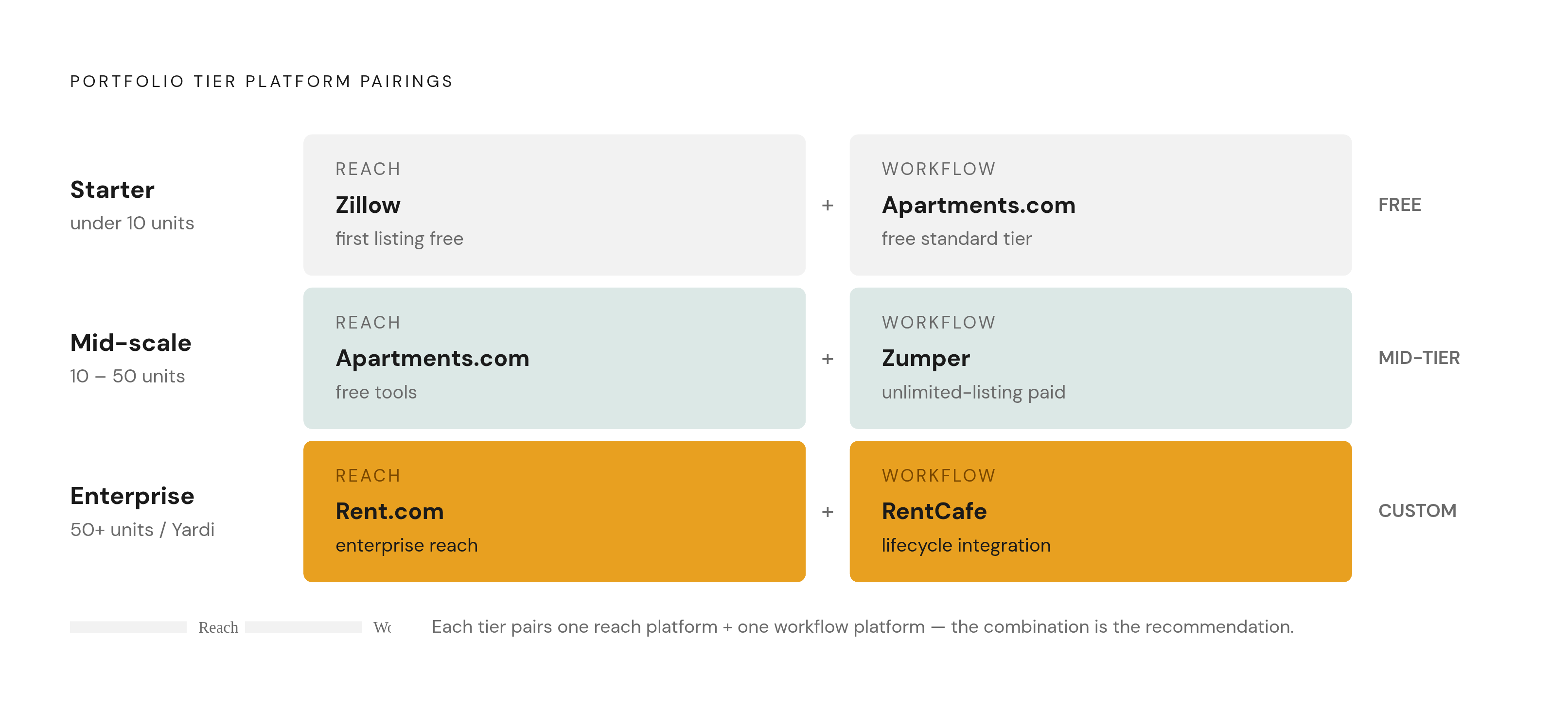
A two-platform minimum makes sense for most multifamily operators, and I'd argue it's closer to the floor than the ceiling. Pair one high-reach consumer platform, either Zillow or Apartments.com, for top-of-funnel volume, with something that goes deeper on workflow: Apartments.com's free tools, RentCafe if you're already running Yardi, or Zumper's enterprise tier. That second platform is what takes some of the grind off your leasing staff instead of just adding more leads to chase.
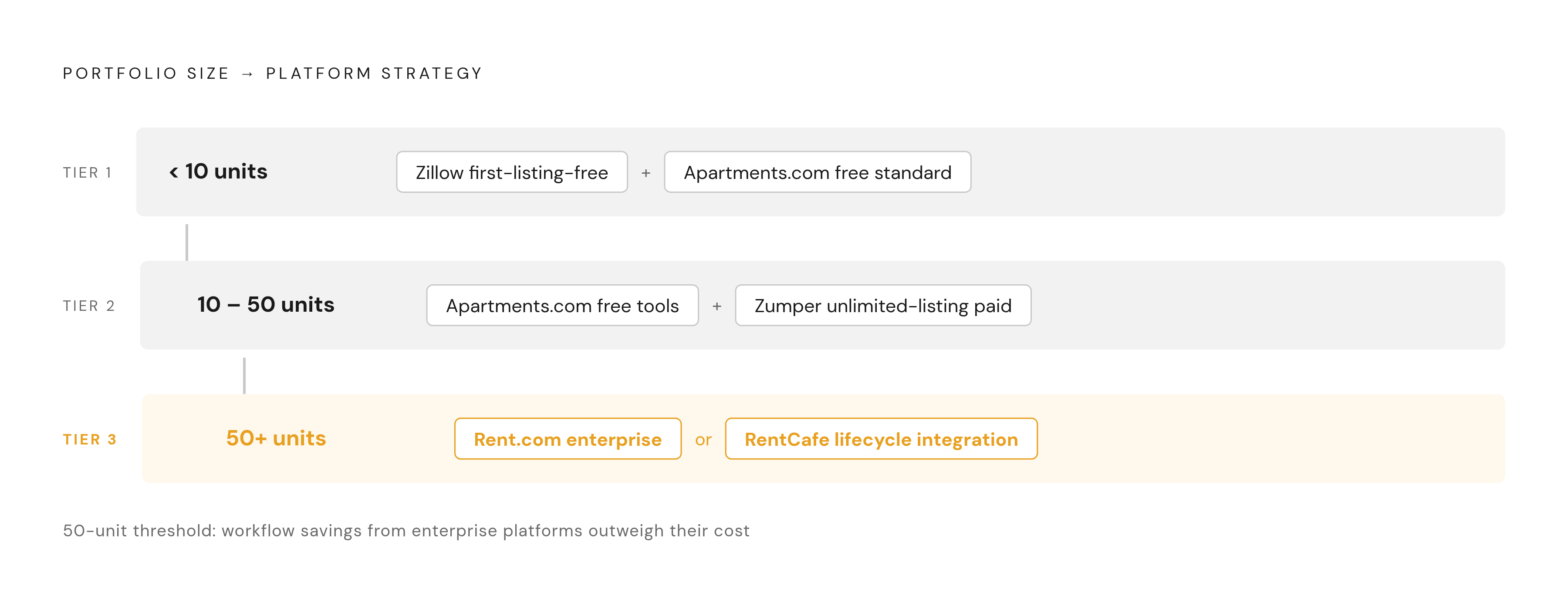
Portfolio size should drive the specifics, and here's roughly how it shakes out. Under 10 units, Zillow's first-listing-free model paired with Apartments.com's free standard tier covers the biggest audiences without spending much of anything at all. Between 10 and 50 units, Apartments.com's free tools plus Zumper's unlimited-listing paid plan buy you coverage and workflow support without stepping into enterprise pricing. Past 50 units, or for shops already running full Yardi systems, Rent.com's enterprise reach or RentCafe's lifecycle integration start paying for themselves, because the workflow savings finally outweigh the higher, murkier cost.
None of this locks in place forever, either. Match each platform's actual strength, reach, cost, or workflow depth, to what your portfolio needs this year, and check back next year, because the antitrust case alone could reshuffle the board before the year is out.