Essay Property Management
Utility Billing Software for Multifamily Property Managers
Automate utility cost recovery while staying compliant with fragmented state and local regulations.
Multifamily property managers use utility billing software to recoup expenses that would otherwise reduce operating income and property value. Selecting the ideal system demands more than just evaluating its functions or costs. How billing is structured, how it connects to management platforms, and how recovery rates are tracked need to align so utility costs turn into precise resident bills without added manual effort.
Why utility costs have become a pressure point multifamily operators can no longer absorb passively
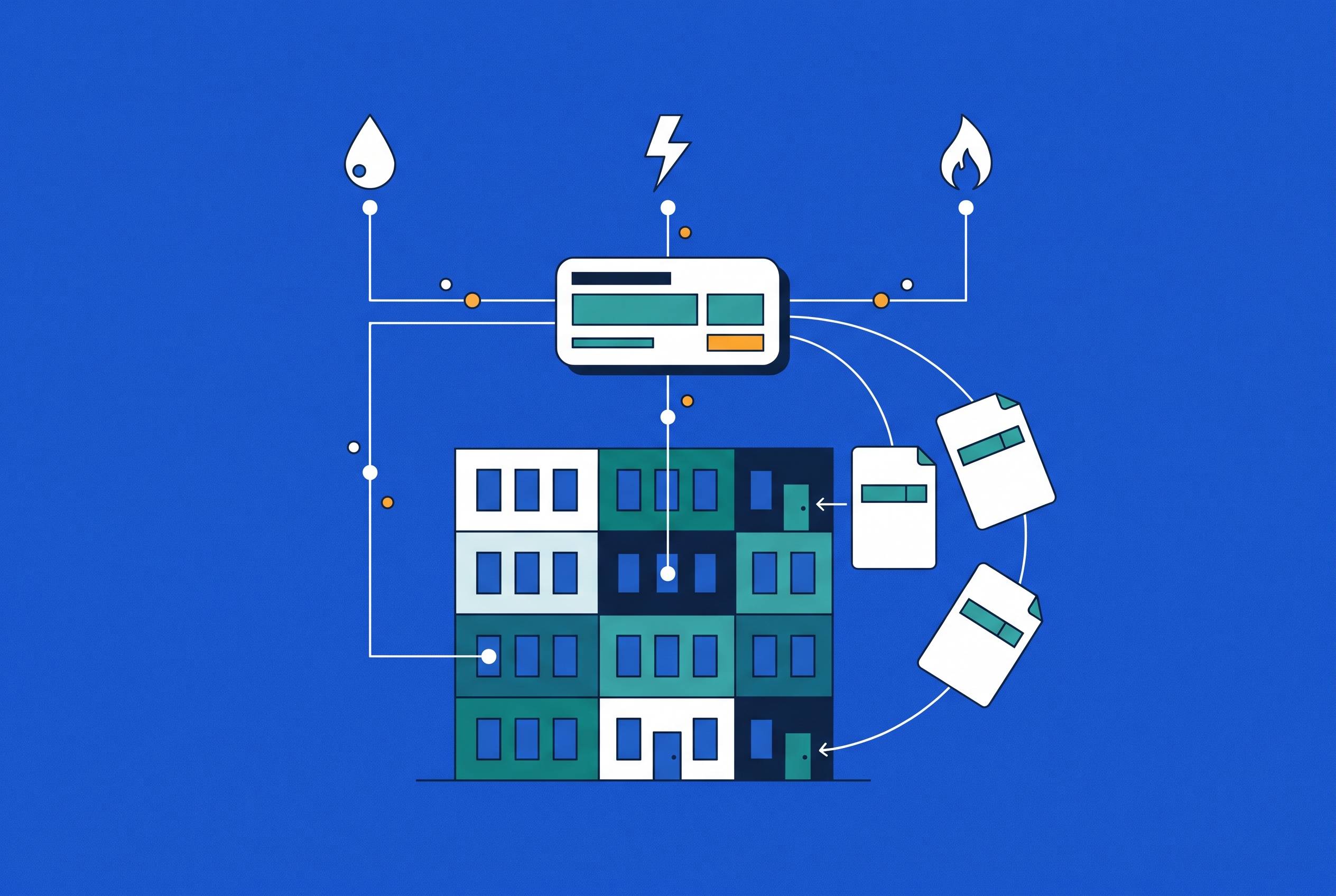
Utility costs cut into operating income because properties have to pay the provider even if they never get that money back from residents. At most multifamily properties, the whole property gets one consolidated utility bill, and then someone has to divide those charges among the tenants. Since each recouped dollar directly boosts profits, the effectiveness of the billing process shapes net operating income as well as asset valuation.
That exposure increases as the portfolio gets more complex. More locations, service categories, and resident turnover events create extra room for worksheet mistakes and overlooked fees. The bottom line is squeezed by billing admin work and by utility usage the property still must cover.
What utility billing software actually does, from invoice ingestion to resident statement
Utility billing software starts by taking in the primary invoice from the utility company. The system parses the incoming document, typically a PDF or hard copy, pulling out usage figures and charges while matching them to the correct property and cycle. Allocation comes next. It then divides that expense among tenant ledgers using the site’s chosen RUBS formula, readings from submeters, or both.
The resulting resident statement lists the total on the master bill, identifies the allocation method or meter reading used, and provides the calculation for each individual charge. The charges are subsequently entered on the resident ledger in the PMS. This workflow also covers prorated charges for residents entering or leaving, bills for vacant units, produces final statements, and supports delivery by electronic or paper. Reliable occupancy records connect these steps to the appropriate residents and applicable billing periods. Any task involving manual rekeying introduces another opportunity for errors.
The two billing methods — RUBS and submetering — and what determines which one fits a property
The billing method starts with the property. Under RUBS, the ratio utility billing system, the property spreads the master bill across units by a preset formula based on residents, floor area, or both. No meters need to be added, and setup is fast enough to suit properties that lack submeters or cannot reasonably add them. Because each resident is charged a share of the whole property’s usage instead of what that household actually used, neighbors may argue over who is paying for someone else’s utilities.
Submetering relies on physical hardware to track individual unit consumption, and charges are based on those readings. That creates a stronger, more justifiable link between what people consume and what they pay. However, upfront investment is necessary before any charges can be issued. Equipment prices range from $500 to $1,500 for each unit based on structure type and sensor design, meaning viability hinges on existing infrastructure alongside total required spending.
Submetering might serve one property but not another, and within a single building, water could be metered while RUBS handles trash and shared-area electricity costs. Virtual submetering, a newer option, applies algorithms to infer unit usage from whole-building data, though verified large-scale rollouts remain largely undocumented. Software needs to handle current practices while staying adaptable to future demands.
The regulatory patchwork property managers must account for before choosing a billing method or platform
In this fragmented regulatory environment, local and state rules on submetering, RUBS, tenant notices, and charge caps also dictate which method a property can use. What passes review in one place may trigger penalties elsewhere, making compliance the first filter before any operational choice. Vitality’s 2026 guide to compliance across states points to clearer fee rules, a shift toward direct metering, and tighter documentation demands as the pressures changing this field.
Colorado HB 26-1013, signed by Governor Polis on March 26, 2026, codified four statutory conditions for compliant RUBS billing. Connecticut has banned RUBS for residential multifamily by court ruling. Local restrictions add another layer of complexity. San Jose and West Hollywood have banned RUBS, while Mountain View has phased it out in rent-controlled units. Los Angeles was considering a ban for rent-stabilized units as of late 2025, following a December 2025 recommendation from its housing department.
Chapter 261 of 2026, known as Maryland SB 130 and active since October 1, 2026, caps administrative fees for submetering while mandating two years of utility cost data before lease signing. For operators spanning several states, relying on manual tracking to stay compliant with such rules is no longer realistic. An up-to-date database tailored to each jurisdiction, surfacing applicable rules for every individual property, spares internal management staff from bearing that burden alone.
Why PMS integration is the structural requirement that separates effective billing from expensive manual workarounds
Disconnected occupancy data undermines any compliance support. Housing a lease and resident details inside the PMS while handling invoices elsewhere forces teams to duplicate every update. Recording a departure solely within the PMS leaves former occupants still receiving utility bills. Failing to add a newcomer to the invoicing system means revenue is lost from day one. Moving residents between units risks overlapping or missing billing cycles, while closing the month demands hand-checking platforms that no longer align.
A prebuilt integration tackles these failures at their root. Move-ins, departures, transfers, plus account changes sync on their own, so billing matches current occupancy without re-entering data. What separates them is a live link versus the mere option to create one. An open API does not prove a supported integration is available now. The question to ask at a vendor demo is thus a pointed one. Which PMS platforms come with ready-made integrations, what is the sync frequency, and who handles upkeep when one of the systems updates?
More locations, service categories, and resident turnover events create extra room for worksheet mistakes and overlooked fees.
Recovery rate — the metric that tells you whether your billing program is working
Integration makes accurate billing possible, but the recovery rate is what shows whether it worked. It gauges billing recovery by comparing what residents were invoiced against the master meter expense for that same billing cycle. Unpaid invoices drive that recovery figure down further. To make performance visible, the platform needs to expose this figure across each property, every utility category, and billing cycle.
If a property’s recovery rate falls materially below comparable properties, it may reflect a calculation mistake, a missing utility type, or a failure to integrate data. With Zego Utility, customers can explicitly track recovery-rate, benchmark usage, and compare recovery across properties. Buyers should make this reporting a standard requirement.
How the main platform types differ — dedicated software, outsourced services, PMS modules, and in-house tools
With specialized software for utility billing, the property management staff decides the timing of invoices, statement contents, and exception handling. These platforms usually link to the PMS, handle both RUBS and meter-based charges, and tend to cost less per unit than outside vendors. The team still does the day-to-day work. That means how thoroughly the platform connects and the training provided during setup are what make this control actually usable for the people running billing.
Outsourced services hand off invoicing, resident outreach, and payment recovery to an external vendor. While that eases staff burden, it also surrenders authority over scheduling, how renters are treated, and what extra charges reach them. Zego exemplifies this fully managed model. PMS modules embed invoicing within the software a team already operates. For instance, ResMan Utility Billing lets teams already on that platform handle charges without deploying another tool.
In-house platforms put operators in charge by removing the middleman that handles billing services. It shares common ground with dedicated software, yet what sets it apart is letting operators keep the financial benefits of handling billing themselves. Vitality operates on this principle. It unites transparent rates, RUBS alongside metered invoicing, automatic PMS charge entry, plus validation before bills go out. Deciding between these approaches hinges on the workload a team prefers to manage internally and the range of capabilities a provider supplies.
What the leading platforms offer and where they differ on the criteria that matter
RealPage Resident Utility Billing handles standard RUBS arrangements along with submetered billing, even when a property uses multiple approaches. It links to the main PMS platforms, finds who should be billed, and posts charges to accounts receivable. Its compliance setup is a clear distinguishing strength. RealPage backs this with a nationwide rules database and staff attorneys who track new and changing legislation. Residents can receive one statement for rent and utilities, a utilities-only bill, or a final bill produced automatically or in OneSite.
Zego Insights unifies tenant invoicing, utility cost oversight, and portfolio analytics within Zego. The platform accommodates both submetered setups and RUBS, alongside seamless connections to leading PMS and accounting systems that keep occupancy figures and billing details in sync. Beyond simply receiving and extracting data from bills, the platform reviews charges, settles discrepancies straight with suppliers, and chases down absent statements. The system flags tenants who failed to transfer services personally, and unified invoices combine rent alongside utility and extra fees payable via phone or web.
Vitality helps operators bring utility invoicing onto their own teams, keeping the revenue they would otherwise pay outside providers. Operators can use RUBS or meters throughout a portfolio, switch approaches as needed, and see prices upfront. Automatic PMS syncing posts charges directly, removing CSV exports and duplicate data entry. Before billing, the system flags irregular activity, absent meter data, and unexpected fees for staff review and approval ahead of resident delivery. Portfolio analytics track usage movement, recovery performance, and cost behavior, with benchmarks by property.
Inhabit ResidentIQ Utility Billing links PMS occupancy records with how residents are billed and receive statements. The system gathers arrival and departure details, computes RUBS fees or takes submeter readings, then applies those amounts to resident accounts. Bills can be sent electronically or on paper. The platform aids oversight reviews and describes how it handles billing and payments as adhering to government rules at every level. Residents can pay by phone, through the web, by mail, or with cash via partner payment centers.
ResMan Utility Billing is another Inhabit product that handles invoicing directly within its own PMS. Both multifamily and affordable communities benefit from consolidated utility statements. Tenants submit payments via their existing rent portal, eliminating the need to oversee an additional invoicing platform. For operators running ResMan, this setup embeds invoicing within the property management system rather than linking to a third-party tool.
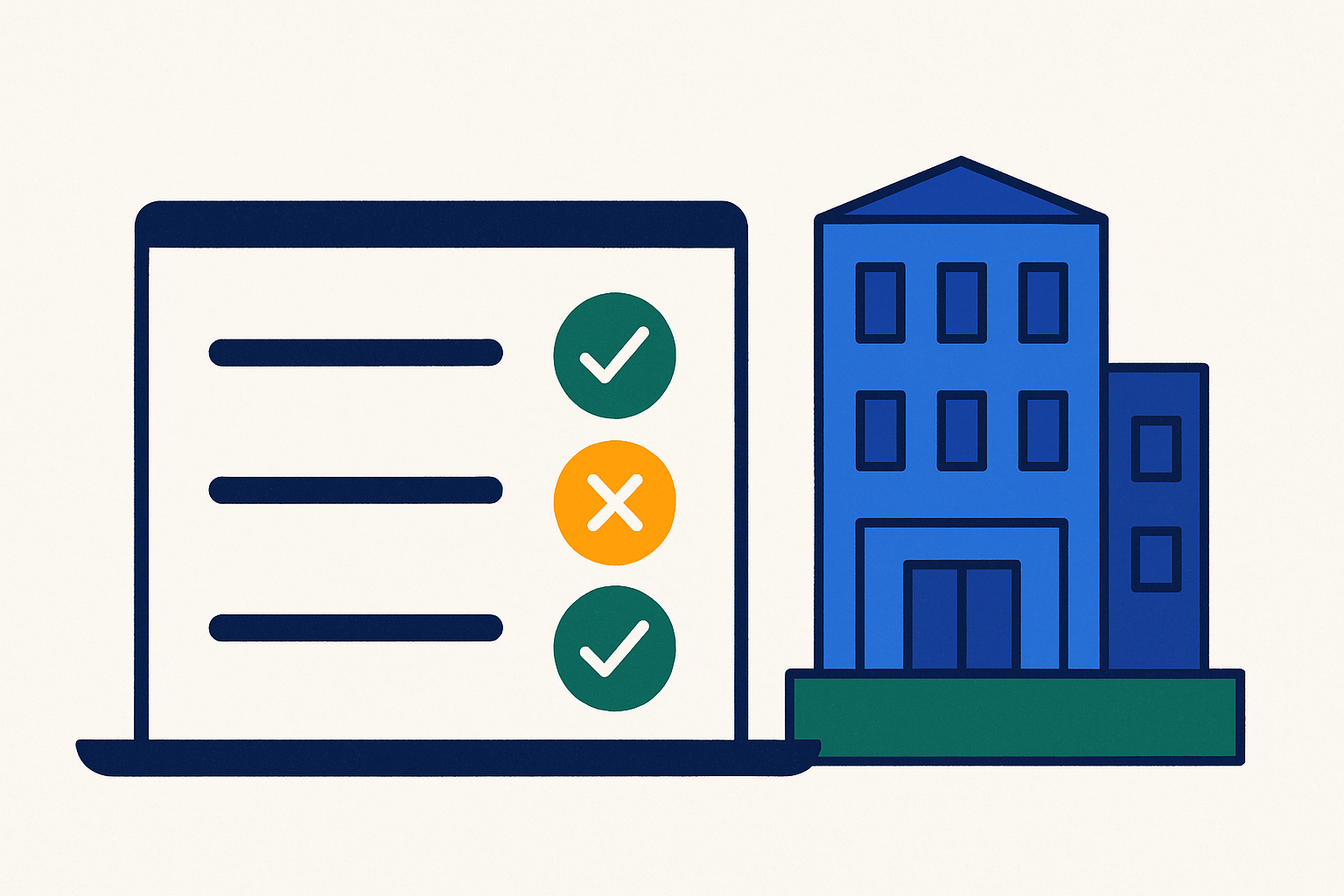
The evaluation checklist — six questions to bring to every vendor conversation
What matters in practice is that the platform fills the recovery shortfalls for the property without adding fresh manual work. Use the questions below to frame the discussion with vendors.
Can the platform manage RUBS, metered resident billing, and property-by-property billing choices within a single portfolio? The evaluation should confirm whether the software can keep pace as building profiles or rules shift while still supporting the billing setup in place.
What PMS platforms currently offer ready-made integrations, at what frequency does information sync, and which party handles upkeep once either platform gets updated? A promise to build an integration differs from a connection that already exists and is supported. Upkeep duties need clear assignment.
Is recovery rate reporting across properties, utility types, and billing cycles included as a standard feature? The demo needs to display the actual report. If only a custom export is available, staff must piece together the key performance indicator that shows if billing is effective.
Does the system stay updated on jurisdiction-specific RUBS, submetering, disclosure, and fee requirements, and automatically identify what applies to each property?
Which issues are caught by pre-bill validation, and can staff examine and sign off on charges before residents receive statements? Use absent meter data, outliers, and atypical fees to gauge the platform’s exception workflow. Staff should also confirm that statements make the resident’s share or meter-based consumption easy to understand.
Ask whether the vendor sells software, offers managed services, or combines both, and how its total price will align with the billing work the team plans to keep. The response ties pricing to labor hours, authority over the resident experience, and kept margin. Since recouped utility expenses shape both net returns and property worth, selecting a platform is a valuation decision that warrants this diligence.